

If you keep animals, you already know how this plays out. Insect season arrives, and suddenly every chemical option you would normally reach for is off the table.
Fly sprays, foggers, and chemical perimeter treatments carry real risks around dogs, cats, horses, chickens, and livestock. Many compounds that work fine in human environments are toxic to birds, dangerous to cats, or produce residues you want nowhere near animals raised for food. And yet flying insects create genuine problems: flies stress and harass livestock, mosquitoes carry disease, and gnats and midges trigger skin conditions in horses and cattle that are frustrating to manage all season.
A well-placed bug zapper is one of the most effective and underused tools available for animal facilities. No chemicals, no residue, and once it is set up, it runs in the background without any daily involvement.
Why Chemical Insecticides Create Problems Around Animals
Most commercially available insect sprays and foggers rely on active compounds in the pyrethroid or organophosphate families. These are effective in general pest control applications but carry specific risks in animal environments:
- Birds and fish: Highly sensitive to pyrethroid compounds. Ambient exposure from foggers or spray drift near water sources can be fatal to backyard poultry, ornamental fish, and pet birds.
- Cats: Permethrin, one of the most widely used active ingredients in yard sprays and fly treatments, is toxic to cats. Even indirect exposure through treated surfaces or air can cause tremors and serious health problems.
- Horses: While horse-specific fly sprays are available, many cause skin reactions in sensitive animals. Frequent application throughout the season adds up in both cost and handling stress.
- Food-producing animals: Chemical residues on animals or in their environment raise concerns for anyone producing eggs, dairy, or meat, even at a small-farm scale.
This leaves many animal keepers working around the problem with fly tape, swatters, and sticky traps, or simply accepting insects as an unavoidable seasonal reality. Neither approach is satisfying.
Why Bug Zappers Work Well in Animal Facilities
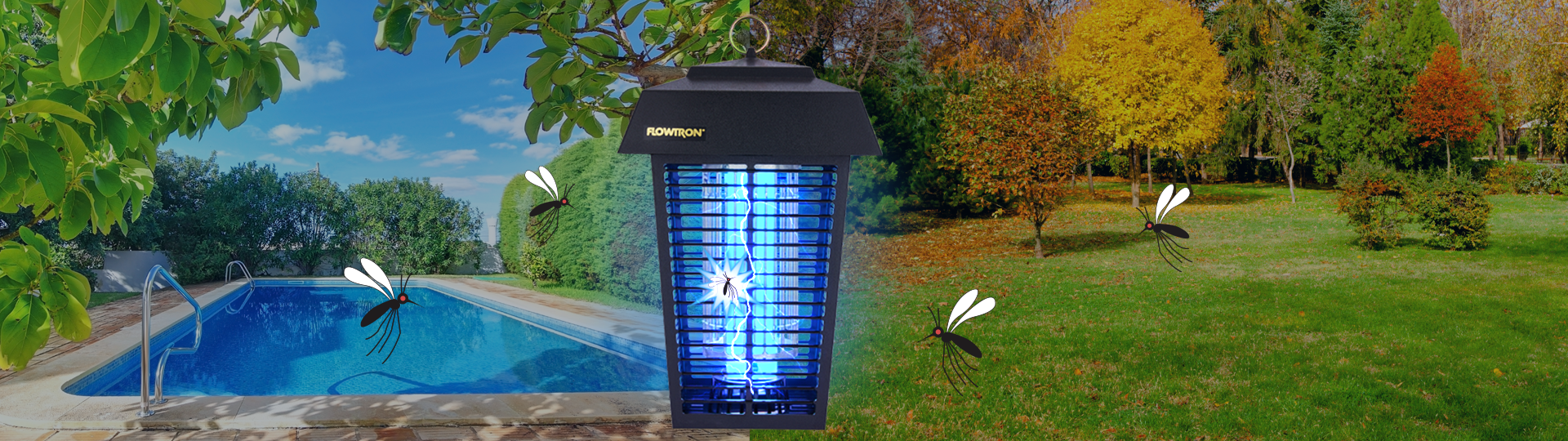
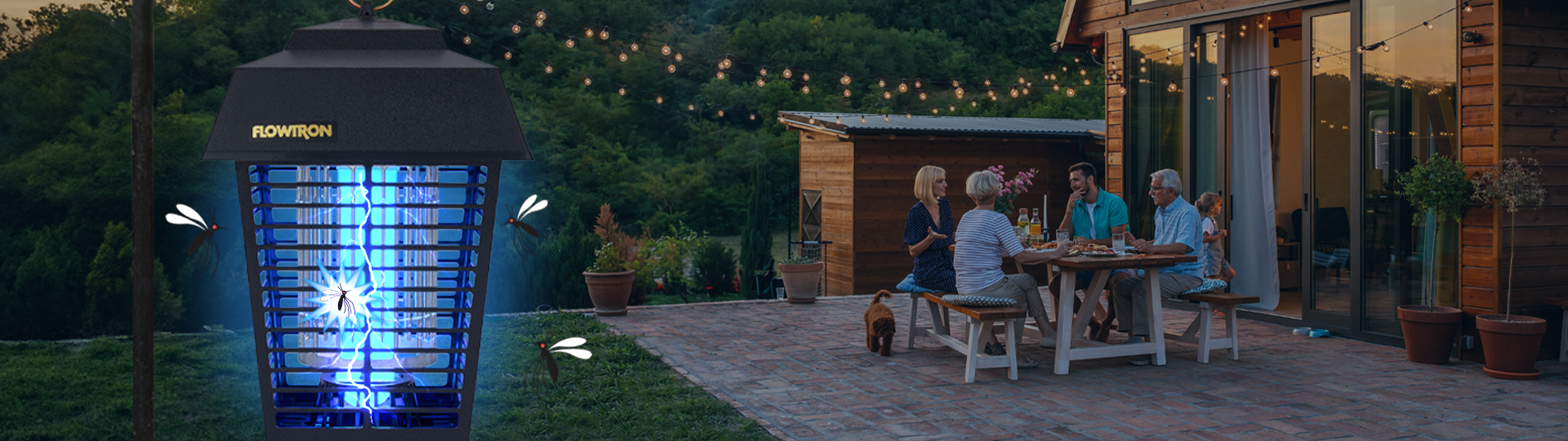
Electronic bug zappers operate without any chemical output. They use UV light to attract flying insects and eliminate them on contact with an electrified grid. No spray, no fumes, no residue. For animal facilities, that is a significant practical advantage.
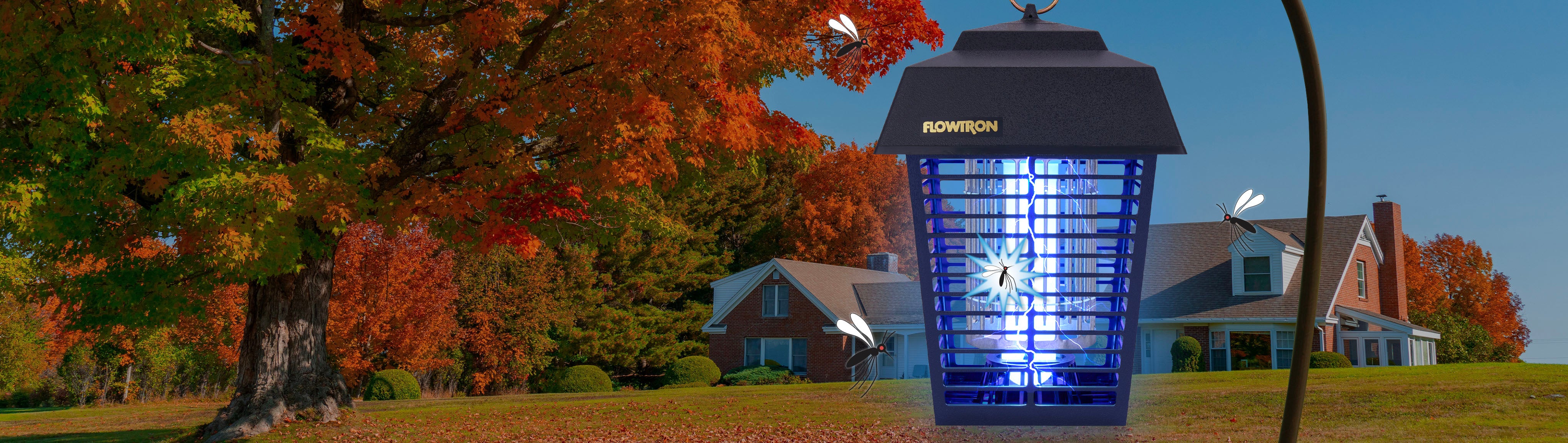
Flowtron's outdoor residential bug zappers cover properties from a half acre up to two acres, making them practical for backyard kennels, small stables, hobby farms, and larger animal operations. They are weatherproof, built for all-season outdoor use, and require minimal attention once positioned.
Placement by Facility Type
Kennels and dog runs
Position the unit at the entrance to the kennel run or along the outer fence line, away from where dogs sleep or eat. The goal is to intercept insects before they enter the space, not to place the zapper where animals could approach it. A hanging pole or mounting bracket at five to six feet keeps the unit well out of reach while maintaining effective coverage.
Stables and barns
Flies are the dominant pest in equine and livestock facilities. Hang units near barn entrances and along the main aisle where flies congregate during the day. For horses in paddocks, position outdoor units along the fence line facing the most likely source of pest activity, whether that is standing water, a compost area, or an adjacent field.
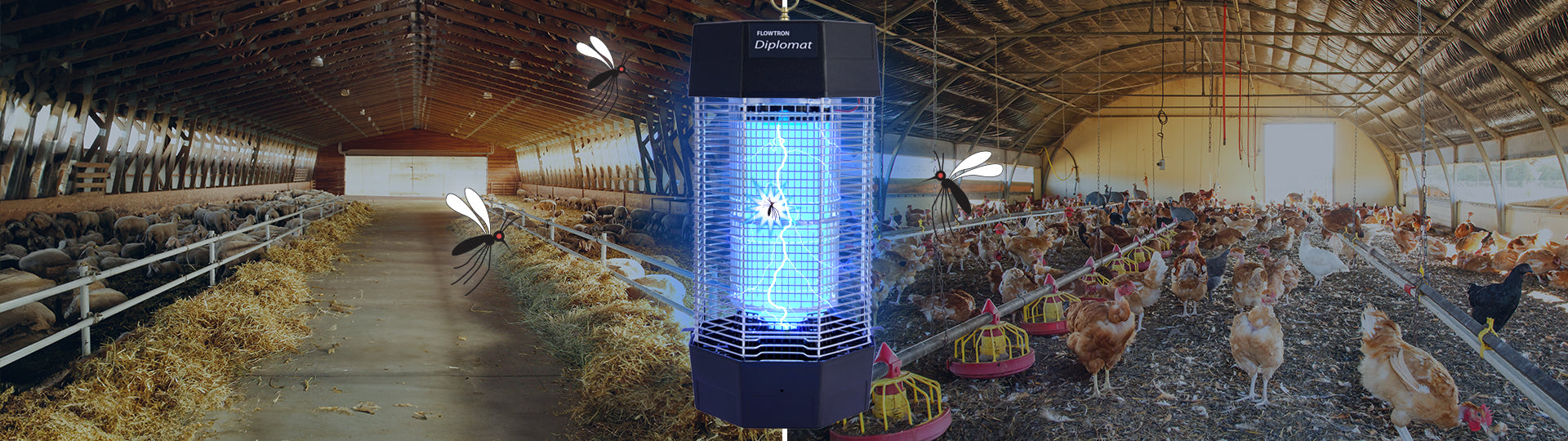
For persistent fly pressure inside working barns, Flowtron's indoor commercial fly killers are built for continuous operation. Adding a Fly Sex Lure to indoor units specifically attracts houseflies, which is the primary species causing problems in most barn environments.
Chicken coops and poultry runs
Poultry are especially sensitive to chemical pest control, and coops naturally attract flies due to feed and droppings. Place a unit at the entrance to the coop or on the exterior perimeter of the run, positioned high enough that birds cannot reach it. Keep units out of the interior roosting space entirely.
Small farms and homesteads
For properties over an acre, the BK-80D at 1.5-acre coverage or the MC-9000 for two acres provides the perimeter coverage that smaller residential models cannot. Concentrate units near water sources, compost areas, and manure storage, where insects breed and concentrate most heavily. Run them from late afternoon through the evening when mosquito activity is at its peak.
Choosing the Right Attractant for Your Main Pest
If mosquitoes are the primary concern alongside flies, pairing your outdoor zapper with a Flowtron Mosquito Attractant Cartridge adds Octenol to the draw, pulling mosquitoes toward the unit more reliably than UV light alone.
For fly-heavy environments like stables, processing areas, and barns, the Fly Sex Lure is the more targeted option. Keeping both on hand lets you switch based on whichever pest is causing the most problems at a given point in the season.
Keeping Units Running Through the Season
Bug zappers in outdoor animal environments collect more debris than typical residential units. A quick check every few weeks maintains full performance:
- Clear the collection tray of accumulated insects and debris
- Check the UV bulb. A bulb that appears dim or flickers intermittently is losing effectiveness. Browse replacement bulbs by model to get the right fit and restore full draw range.
- Replace the attractant cartridge on schedule, typically every 30 days during the active season
- Inspect the power cord for wear or damage, particularly if animals can access the area around the unit
Replacement components for all Flowtron models are available in the accessories and parts collection, so a mid-season replacement does not mean downtime waiting for parts.
Pest Control That Works While You Work
Anyone running a kennel, stable, or farm knows that pest management needs to happen in the background. You cannot spend your mornings chasing flies around a barn aisle when animals need feeding and stalls need cleaning.
A properly placed bug zapper handles insect pressure continuously without daily attention. It runs through every shift and every evening without putting a single chemical into the environment where your animals live.
Explore the outdoor residential bug zapper lineup to find the model that fits your property size and setup, or visit our FAQ page with questions about coverage and placement for your specific situation.