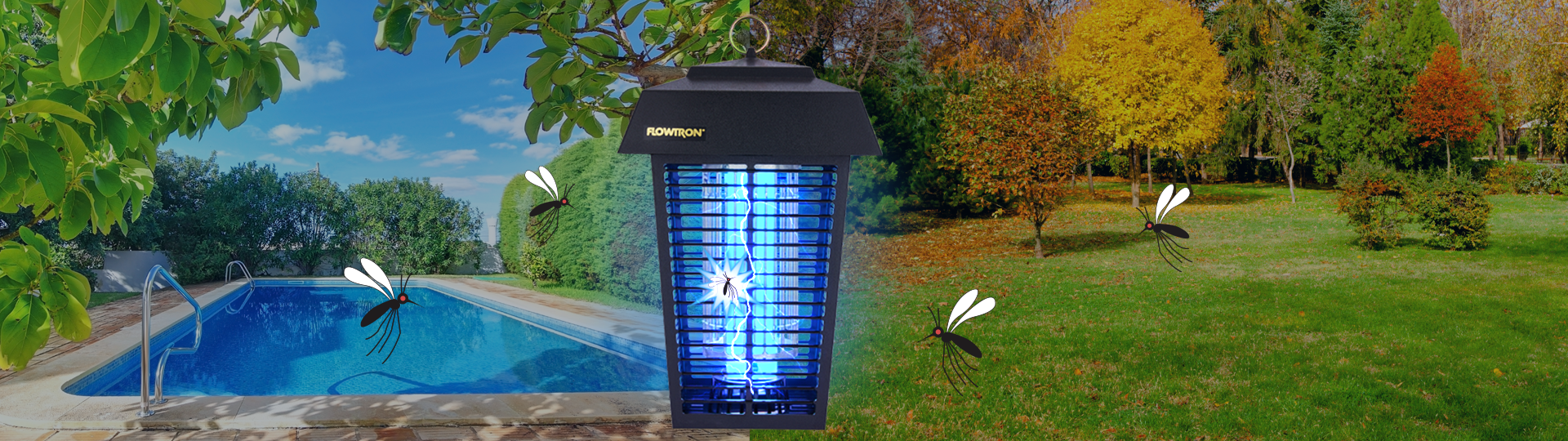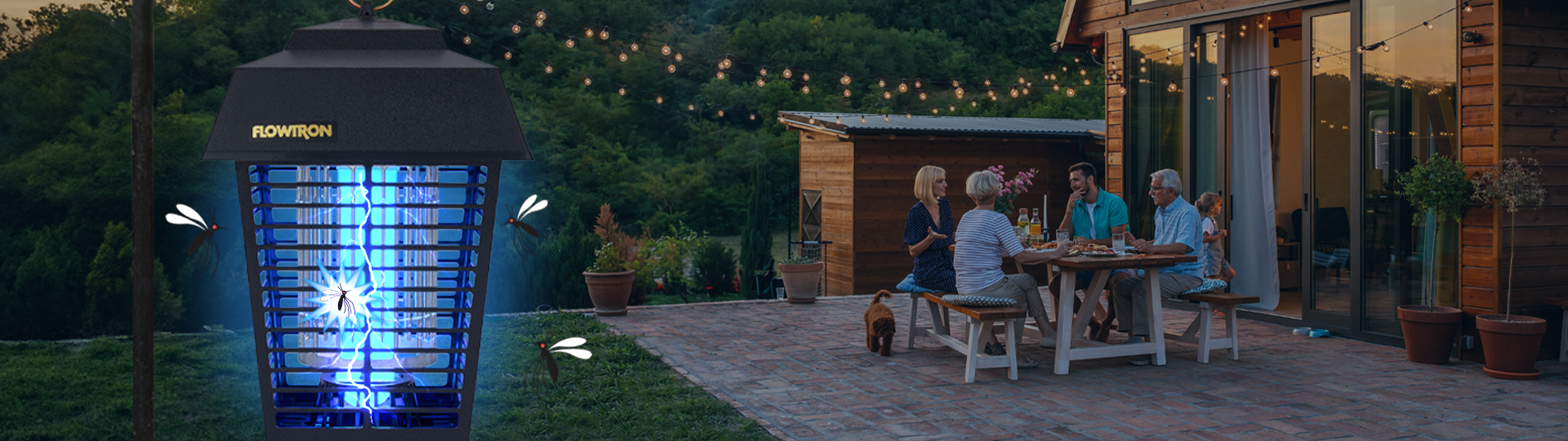


Walk into any home improvement store in June and you will see them both: bug zappers on one end of the aisle, propane-powered mosquito traps on the other. Both promise a yard free from mosquitoes. The prices are very different. So are the ongoing costs.
If you are weighing an electronic bug zapper against a CO2-based mosquito trap, here is a practical comparison of how they actually perform, what they cost to run, and which one makes more sense for most backyards.
How Each Technology Works
Electronic bug zappers
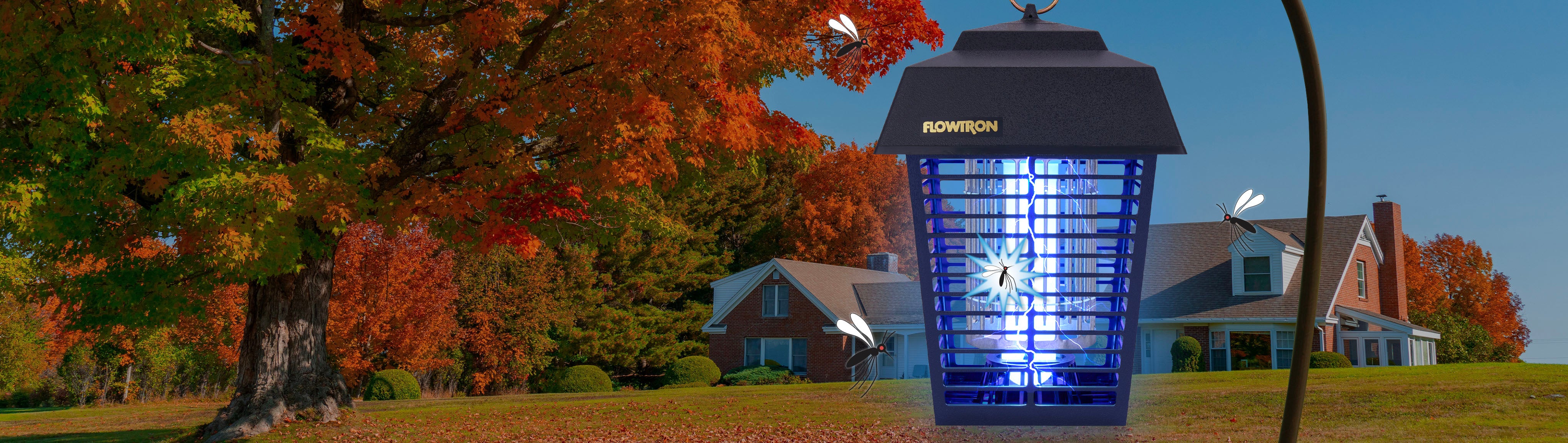
Bug zappers use UV light to attract flying insects, then eliminate them on contact with an electrified grid. Flowtron's outdoor residential lineup covers properties from a half acre up to two full acres. No chemicals, no propane, no ongoing fuel costs. Once installed, they run quietly in the background for the whole season.
CO2 and propane mosquito traps
Propane traps burn propane or use a catalytic converter to generate CO2, mimicking human breath to draw mosquitoes toward the unit. A vacuum or sticky surface captures them.
They are engineered specifically for mosquitoes, and in controlled conditions they do attract them in meaningful numbers. The trade-offs show up in cost, maintenance, and sensitivity to operating conditions.
Cost: What You Actually Spend
Purchase price: A quality bug zapper like the Flowtron BK-40D covers one full acre and represents strong value compared to propane mosquito traps, which typically start at two to three times the price and scale higher for large-coverage models.
Running costs: Bug zappers run on electricity at low wattage. Propane traps burn through fuel continuously and at full operation can add up to a substantial seasonal cost in propane alone. Add collection net cleaning and occasional part replacement, and the total operating cost over a season is significantly higher than an equivalent electric zapper.
Maintenance: Zappers need an annual UV bulb swap. Propane traps require regular fuel refills, net cleaning, and periodic servicing. Over multiple seasons, the cost difference becomes hard to ignore.
Performance: Where Each One Wins
Mosquito targeting
Propane traps hold a narrow advantage in mosquito-specific attraction because CO2 is a more direct cue for mosquitoes than UV light alone. That gap closes substantially when you pair a bug zapper with an Octenol attractant. The combination of UV and Octenol draws mosquitoes reliably without any fuel cost.
Coverage and reliability
Flowtron zappers are built for continuous outdoor use through the full season. The BK-80D covers 1.5 acres and the MC-9000 reaches two full acres. They handle rain, humidity, and temperature swings without issue.
Propane traps are sensitive to wind. Any breeze disrupts the CO2 plume they rely on to attract mosquitoes, and effectiveness drops in breezy conditions. They also require careful positioning to ensure the plume drifts toward mosquito sources rather than toward your seating area.
Control beyond mosquitoes
A bug zapper handles mosquitoes, flies, gnats, moths, and other flying pests at the same time. A propane mosquito trap is designed for mosquitoes only. If flies and gnats are also a problem on your property, a zapper covers considerably more ground.
Setup, Placement, and Day-to-Day Use
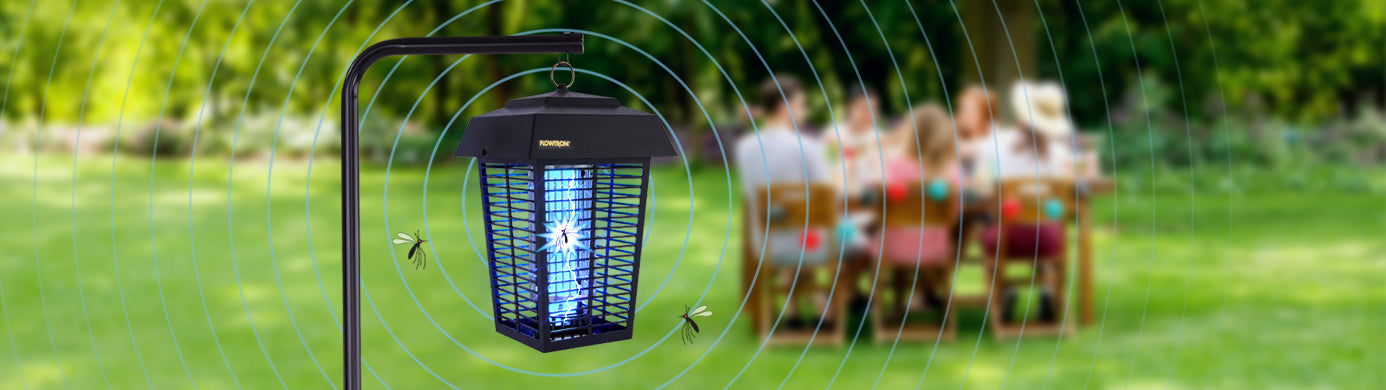
Bug zappers hang from a security pole or bracket, plug into a standard outlet, and are ready to go. Position the unit on the perimeter of your activity area, roughly 20 feet from where people gather, and run it from late afternoon through the evening.
Propane traps require more deliberate positioning. The CO2 plume needs to drift toward mosquito breeding areas without reaching your patio. They typically need to run around the clock to build up a population impact, which accelerates fuel consumption.
Which One Should You Buy?
For most residential yards, a Flowtron bug zapper paired with a mosquito attractant cartridge delivers solid mosquito control at a fraction of the long-term cost of a propane trap. The BK-40D for up to one acre and the BK-15D for smaller patios and decks are the right starting points for most homeowners.
Propane traps may be justified for very large rural properties with severe mosquito pressure near standing water or marshland, where the specific CO2 attraction and higher operating budget both make sense. For the typical backyard or outdoor entertaining space, they are an expensive answer to a problem a well-chosen bug zapper handles well.
Not sure which model fits your property? Browse the full bug zapper collection to compare coverage areas and features, or check our FAQ page for guidance on your specific situation.