

A fly circling the dessert counter. A gnat hovering near the coffee bar. A housefly landing on the bread service before a table notices. In a restaurant, these moments carry consequences that extend well beyond a momentary annoyance.
Fly problems in food businesses affect customer perception immediately and visibly. In the age of photo-heavy reviews, one unfortunate image can do real reputational damage. And for operators who take health inspections seriously, persistent insect activity in a food environment is exactly the kind of detail that inspectors notice.
The difficulty is that most conventional pest control options are not practical in spaces where food is being prepared or served. Here is how professional food businesses solve this problem, and why UV fly killers are the method the industry has settled on.
Why Chemical Pest Control Is Not the Answer in Food Environments
Aerosol sprays and foggers are effective insecticides, but applying them in an active restaurant or food prep environment introduces obvious problems. Residue can settle on prep surfaces, equipment, and open food. Most products require clearing the area and allowing ventilation time before food service resumes, which means operational shutdowns during the middle of a service period.
Chemical treatments also do not differentiate between targeted pests and the general environment. In a kitchen where surfaces need to remain clean and food-safe, anything that introduces chemical residue into the air or onto surfaces is a liability rather than a solution.
UV fly killers sidestep all of this. They use light to attract insects, contain them in a tray or on a sticky surface, and operate without releasing anything into the surrounding environment. For food businesses, that is why they have become the standard approach rather than the exception.
Flowtron Indoor Fly Killer Options for Food Businesses
Flowtron's indoor commercial collection includes units designed for professional food service and commercial use:
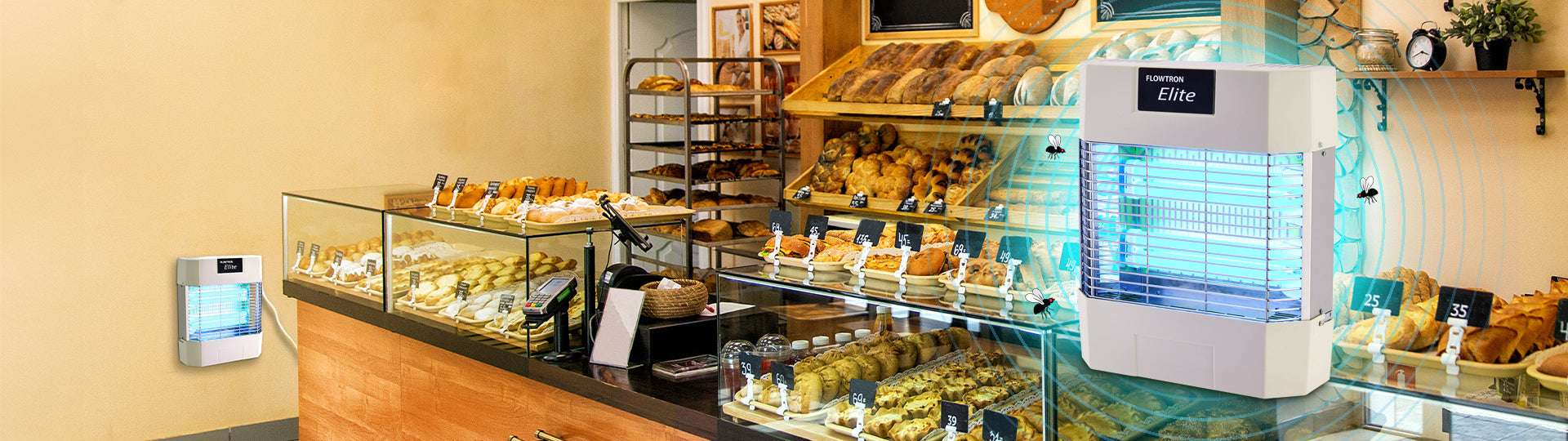
The 80W Indoor Commercial Fly Killer is a wall-mounted unit built for continuous operation in commercial kitchens, prep areas, and dining rooms. It runs silently, contains captured insects in a sanitary collection tray, and is engineered for the demands of a high-activity commercial environment. The 80W commercial fly killer is the right starting point for most restaurant kitchens and food prep spaces.
The 120W Indoor Commercial Fly Killer delivers expanded coverage for larger spaces: production kitchens, catering facilities, food processing areas, and large receiving or staging zones. The 120W commercial fly killer is the unit for spaces where the 80W coverage footprint is not enough.
Indoor Sconce Fly Killers offer a more architecturally considered option for dining rooms and front-of-house areas. Available in 40W and 80W configurations, sconce-style units mount on the wall and integrate into interior spaces more naturally than industrial units, making them appropriate for dining rooms, hotel lobbies, and hospitality environments where appearance and function both matter.
Where to Place Units for Best Results
Placement is as important as which unit you choose. A well-positioned fly killer intercepts insects before they reach food preparation or service areas. A poorly positioned one creates a nuisance of its own.
Intercept at entry points first. The most effective placement catches flies before they move through the building. Mount units near back-door entries, receiving dock access points, and the transition zone between front-of-house and kitchen. A unit at the entry point captures the bulk of flies before they spread.
Keep units clear of open food. Best practice is to keep fly killer units away from areas where food is directly exposed. Side-wall mounting near entry and transition points is the most common approach in working kitchen environments. Avoid positioning units directly above prep surfaces or food service areas.
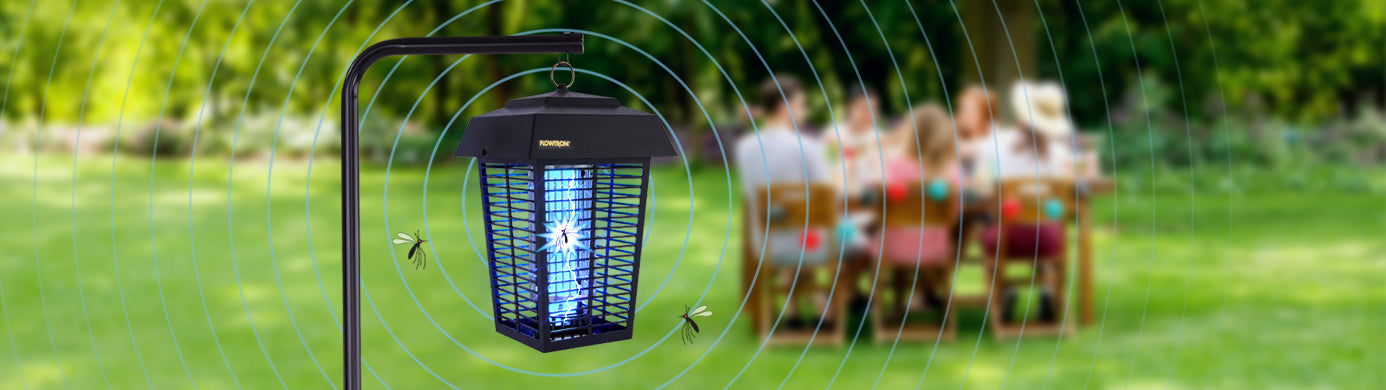
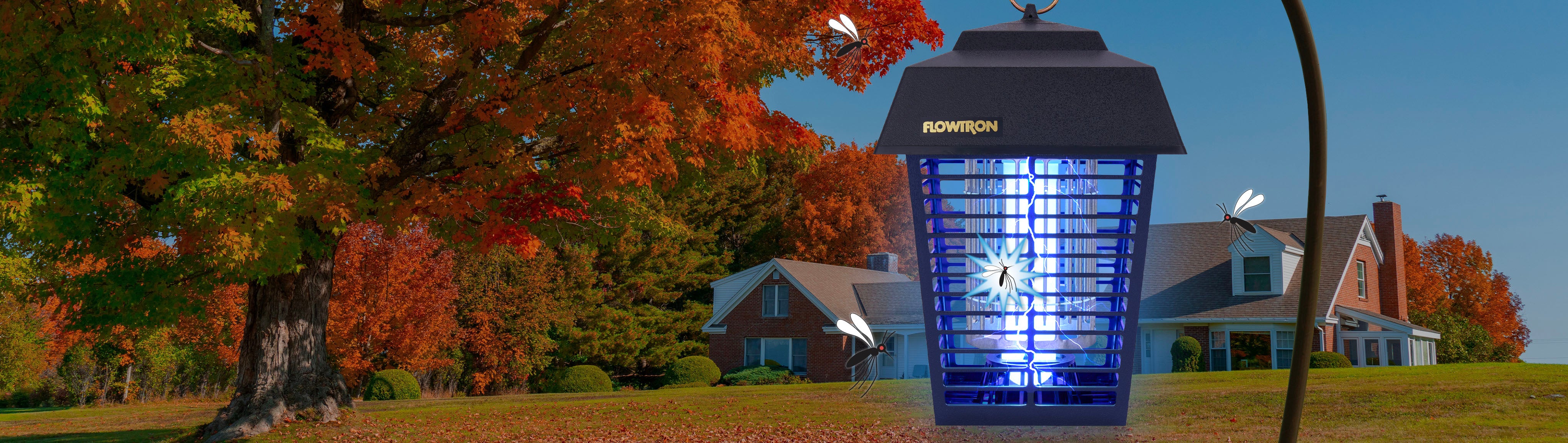
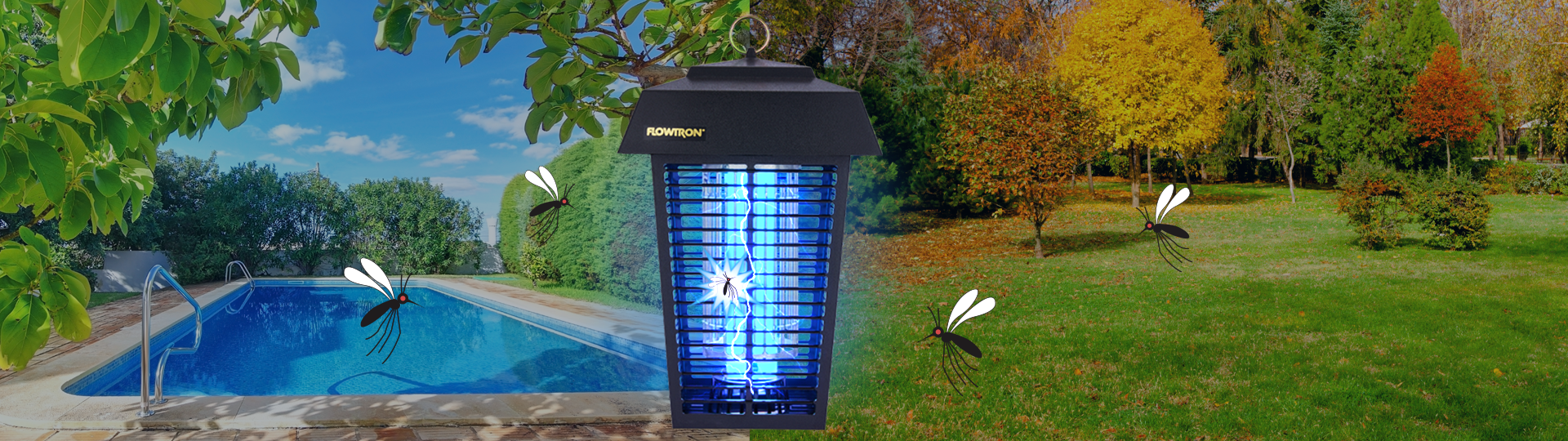
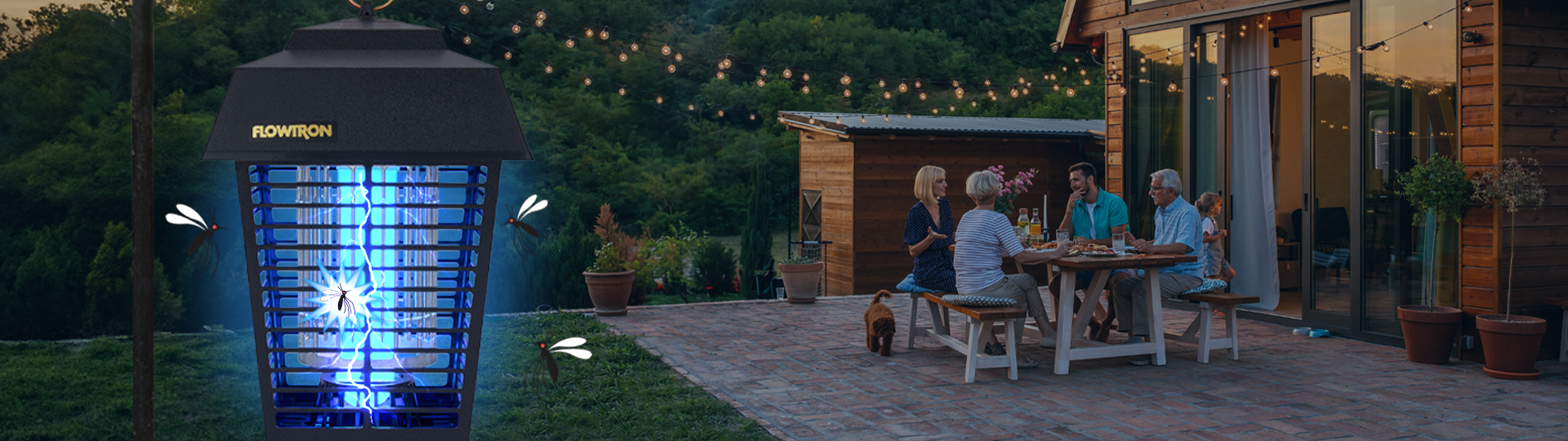
Cover outdoor dining separately. For restaurants with outdoor patios and terrace dining, Flowtron's outdoor bug zappers positioned around the perimeter of the dining area create a protective zone without any chemical exposure. Position units 15 to 20 feet from the outermost tables and run them throughout service hours.
Address the whole building, not just the kitchen. Flies that make it past the kitchen entry point tend to travel through the facility. Covering receiving areas, storage rooms, and break spaces alongside the kitchen gives you full coverage rather than just a single line of defence at the prep area.
Handling Daytime Fly Pressure
Unlike mosquitoes, houseflies are most active during the day, which means indoor fly killers in food businesses need to perform during service hours, not just after dark.
For outdoor dining areas or units near back-door entries that stay open during the day, adding a Fly Sex Lure to outdoor units specifically targets houseflies during daytime hours, improving catch rates when insects are at peak activity.
A Maintenance Schedule That Works Around Service
Commercial food environments need maintenance that does not disrupt operations. Flowtron's indoor units are straightforward to maintain on a commercial schedule:
- Empty and clean collection trays regularly. In high-activity environments, weekly cleaning is the baseline during summer; daily during peak fly season
- Replace UV bulbs on a set annual schedule regardless of visible output. Bulbs lose UV effectiveness before they appear to fail visually. Stock replacement bulbs in advance so a scheduled swap does not create downtime.
- Replace sticky pads on a regular schedule for units that use them, based on activity levels and the manufacturer's guidance
- Keep spare components on hand. The parts and accessories collection stocks transformers, bulbs, and other components for all commercial models. A unit down in a busy kitchen during the summer season is a problem you want to resolve the same day, not after a parts order arrives.
The Operational and Reputational Case
A persistent fly problem in a restaurant is not just an unpleasant experience for customers. It is a visible indicator of how the operation is being run, and customers form impressions quickly. One review mentioning insects can undo a great deal of goodwill built by the food and the service.
UV fly control works continuously without requiring staff intervention, without chemical exposure, and without disrupting service. It is the kind of operational detail that takes little effort to set up correctly and pays back throughout the entire season.
Explore the full indoor use collection to find the right model for your kitchen, dining room, or outdoor terrace. Our support team is available if you have questions about placement, coverage, or which unit fits your specific setup.