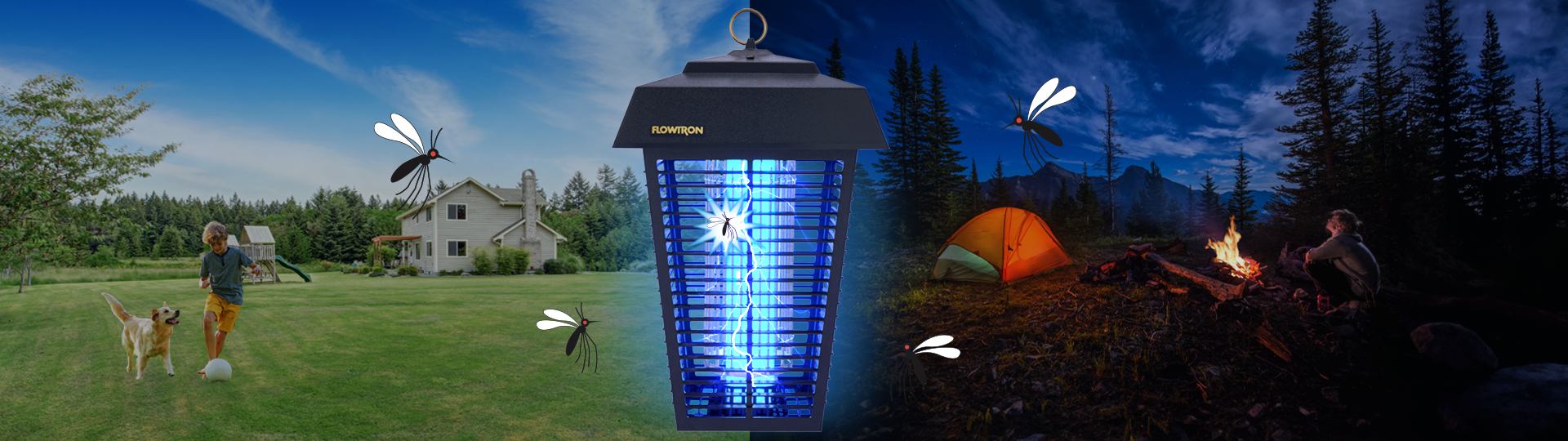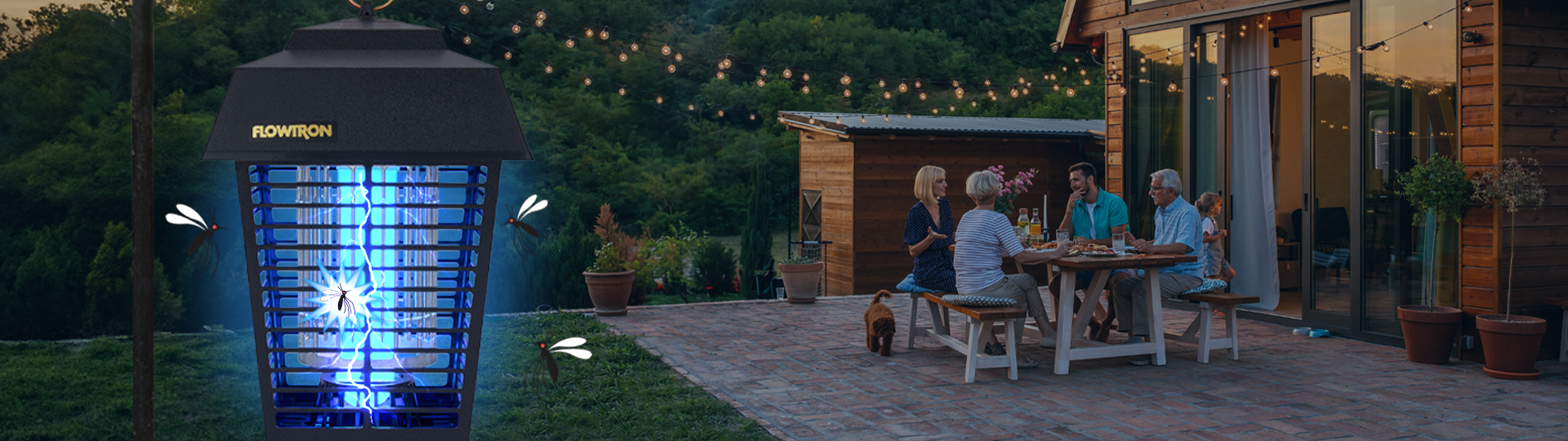


You set up your bug zapper, ran it all afternoon, and walked away wondering if it did anything at all. Sound familiar?
It is one of the most common questions we get, and the honest answer is more nuanced than a flat yes or no. Bug zappers do work during the day, but they work significantly better after dark. Understanding why makes all the difference in how you get results from yours.
How Bug Zappers Actually Attract Insects
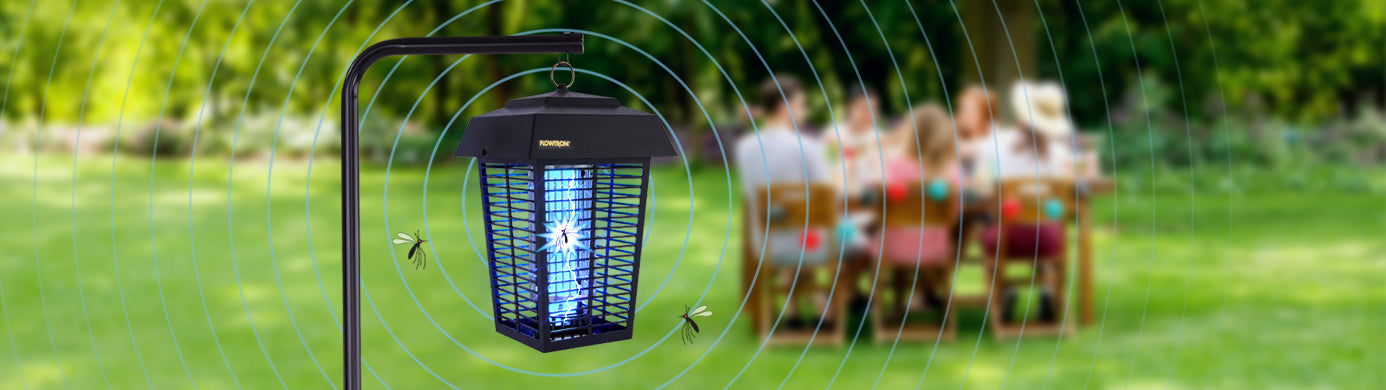
Before getting into timing, it helps to understand what is doing the work. Flowtron's outdoor bug zappers use UV light to attract flying insects. UV light mimics the navigational light cues that many insects rely on, and bugs like moths, gnats, and flies are highly responsive to it.
Mosquitoes are a different matter. They are primarily drawn to carbon dioxide, body heat, and certain compounds produced by skin, rather than UV light on its own. That is why pairing your zapper with a Flowtron Mosquito Attractant Cartridge makes such a practical difference, particularly if mosquitoes are your main concern.
Why Daylight Reduces Effectiveness
Here is the core issue: UV light competes with sunlight during the day, and sunlight wins by a wide margin.
Your bug zapper emits UV in a wavelength range insects can detect, but in bright outdoor conditions that signal is overwhelmed by ambient daylight. Think of it like trying to see a flashlight beam in direct sun. The light is still on, but the range of its signal drops considerably.
This does not mean the zapper does nothing during daylight hours. Insects that fly close enough will still be attracted and eliminated. But the effective draw radius shrinks, and the overall catch rate drops off compared to evening operation.
When Bug Zappers Are Most Effective
Dusk through midnight
This is the prime window. As natural light fades, your zapper's UV output becomes the brightest nearby light source, drawing flying insects from a wider radius. Mosquitoes also peak in activity during the first hour after sunset and into the evening, making this the stretch where consistent use pays off most.
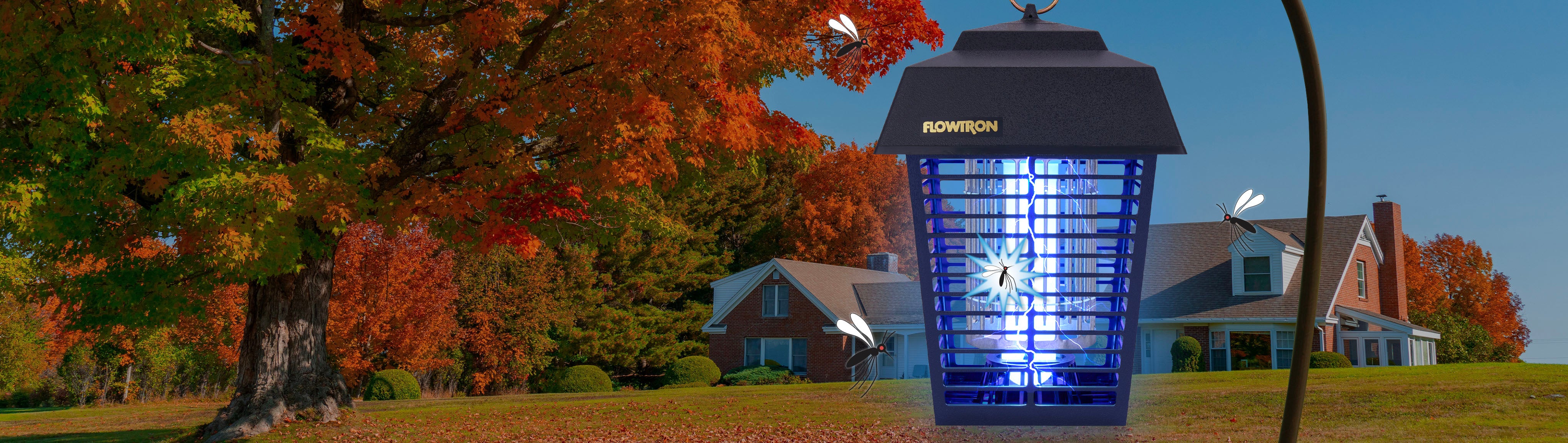
Running a 1-acre BK-40D or a 1.5-acre BK-80D from sunset through midnight will get you the best results for your coverage area.
Overcast and low-light days
On heavily overcast days, ambient light levels fall enough that your zapper becomes visibly more effective even in the afternoon. If you are hosting an outdoor gathering on a cloudy summer day, running the unit a few hours beforehand is a worthwhile step.
Indoors, any time of day
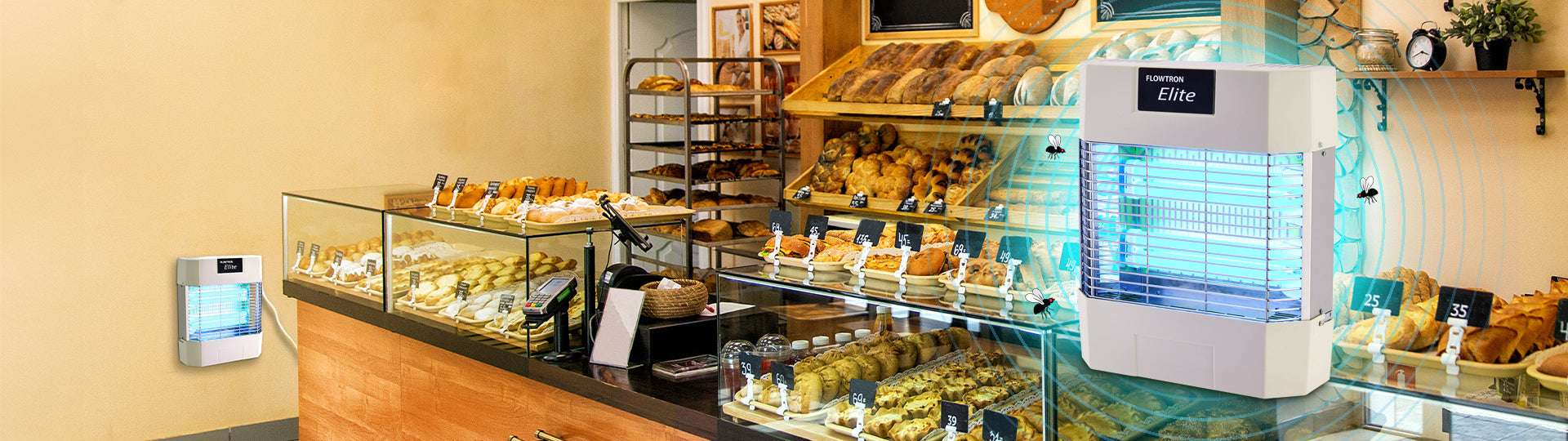
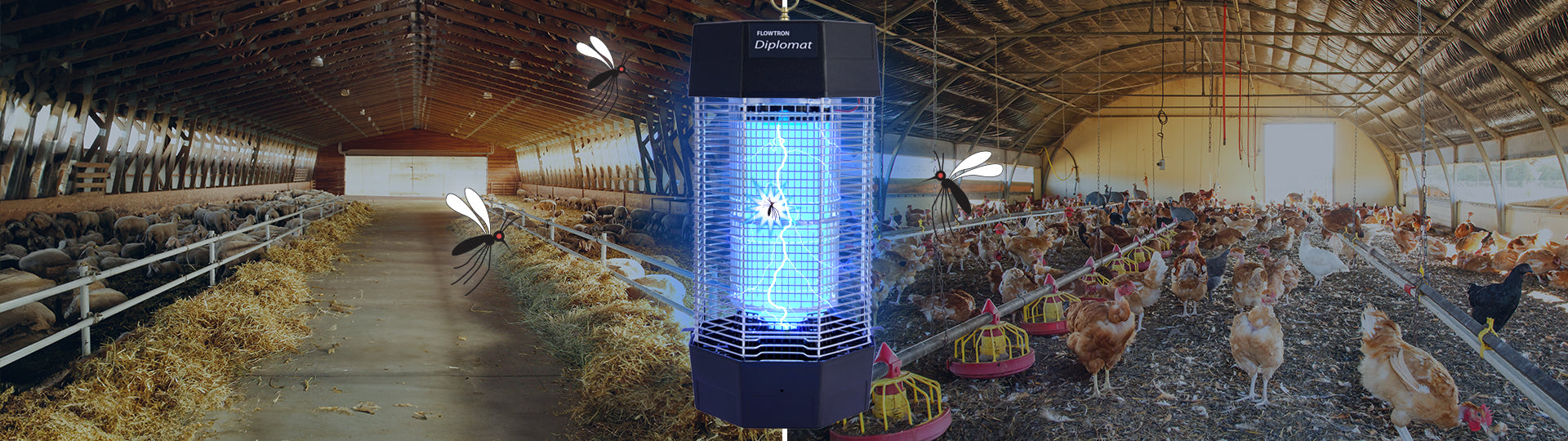
For indoor units, time of day is almost irrelevant. In a warehouse, restaurant kitchen, bakery, or office space, artificial lighting levels do not compete with UV output the way direct sunlight does outdoors. Flowtron's indoor commercial fly killers are designed to run continuously around the clock, and that is how most commercial operators use them.
Does Running It All Day Waste Energy?
Not significantly. Flowtron's outdoor residential units are efficient by design. The BK-40D draws 40 watts, similar to a small desk lamp. Running it continuously costs less over a full season than most people expect.
That said, running it through peak daylight hours outdoors gives you less return per hour than evening operation. The approach most people settle on: set a timer to start in the late afternoon and run through midnight. That covers the high-activity window without leaving the unit on during the least productive hours of the day.
What About Flies During the Day?
Houseflies and bottle flies are diurnal, meaning they are most active during daylight hours. For fly control specifically, running your bug zapper during the day is more productive than it is for mosquitoes.
If flies are your main concern, a zapper paired with a Fly Sex Lure is particularly effective. This lure targets houseflies directly, improving capture rates regardless of ambient light levels.
For persistent fly problems in commercial settings such as food service, processing, or logistics, Flowtron's indoor commercial units running during business hours are the right fit.
Four Ways to Get More From Your Bug Zapper at Any Hour
Keep placement on the perimeter. Position the unit on the edge of your activity area rather than directly above where people gather. Whether day or night, the goal is to draw insects toward the zapper and away from you.
Add an attractant. The Mosquito Attractant Cartridge releases Octenol continuously, compensating for reduced UV visibility during daylight. For daytime fly pressure, the Fly Sex Lure serves the same function.
Keep your UV bulb in good condition. A fading bulb reduces effectiveness at any time of day, but the impact is most pronounced in daylight when the unit is already working against ambient light. Check our replacement UV bulb collection to find the right fit for your model and replace it at the start of each season.
Match the unit to your coverage area. A unit rated for half an acre used on a two-acre property will not deliver adequate perimeter coverage regardless of the time of day. Browse the full bug zapper collection to confirm you have the right model for your space.
The Bottom Line on Daytime Use
Bug zappers work during the day, but they perform best after dark. For mosquitoes, the window from dusk through midnight delivers the strongest results. For flies, daytime operation is productive. For indoor settings, the time of day makes little practical difference.
Run your unit during its most effective window, keep the bulb fresh, and add an attractant if you have not already. Those three things will do more for your results than anything else.
Questions about your setup? Visit our FAQ page or reach out via our Support page and we will help you get dialled in.